

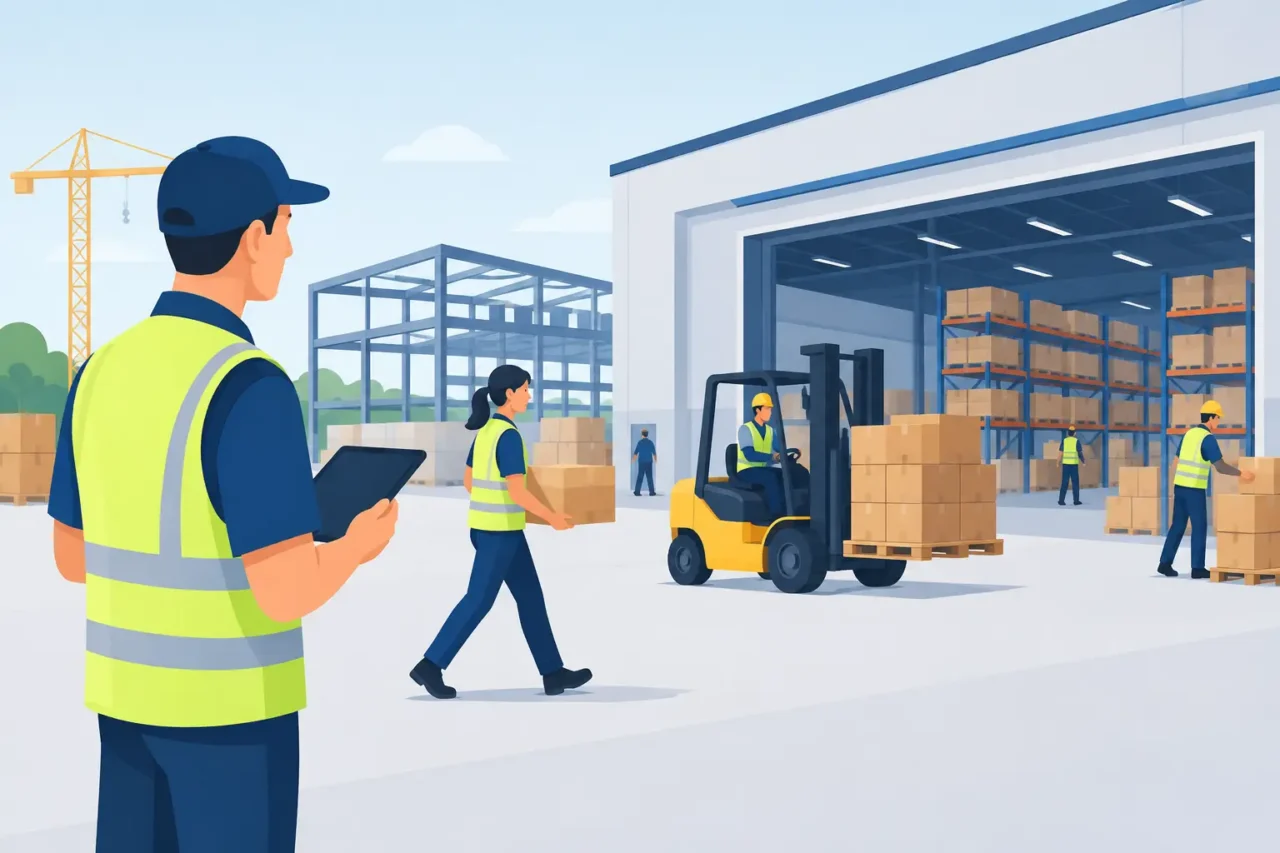
A warehouse expansion can look successful on paper long before it feels successful on the floor. New racking may be installed, additional square footage may be available, and customer demand may be growing, but none of that helps if receiving, picking, packing, and shipping fall behind. Temporary staffing for warehouse expansion in Vancouver gives operations leaders a practical way to add dependable personnel while the facility adjusts to higher volume, new workflows, and changing shift requirements. For warehouses and distribution centres across Metro Vancouver and the Fraser Valley, where space is tight and demand can shift quickly, that flexibility matters even more.
For many warehouses, the staffing challenge is not simply hiring more people. It is adding the right number of workers, with the right capabilities, at the right point in the expansion. Moving too slowly can create missed shipping windows and exhausted core teams. Moving too aggressively can leave the business carrying unnecessary payroll once the initial rush settles.
Why warehouse expansion creates immediate staffing pressure
Expansion changes more than the size of a building. It changes travel paths, inventory locations, equipment needs, safety procedures, and the pace of every department. A team that handled a steady daily order count in one operating area may struggle when inventory is split across new zones or when outbound volume climbs faster than expected.
Receiving often feels the pressure first. More product arrives, staging areas fill quickly, and put-away work competes with ongoing replenishment. Picking teams may need more coverage to maintain service levels, while packing and shipping need enough people to prevent completed orders from piling up at the end of the line.
Existing employees frequently absorb this work at first. Overtime can help for a short period, but it is not a long-term staffing strategy. Long hours increase fatigue, raise the risk of errors, and can affect morale among the experienced workers the operation relies on most. Temporary personnel can reduce that strain by handling essential volume-driven tasks while permanent team members focus on quality, training, inventory control, and supervisory responsibilities.
Temporary staffing for warehouse expansion in Metro Vancouver: where it fits
Temporary staffing works best when it is tied to a clear operating need rather than used as a broad response to uncertainty. A warehouse may need additional hands for a new shift, a seasonal volume increase, a system conversion, a facility move, or a large customer onboarding. In each case, the number of workers and required experience can be adjusted as the operation stabilizes.
Common temporary warehouse assignments include order picking, packing, palletizing, loading and unloading, sorting, labeling, inventory support, sanitation, and general material handling. Depending on the role and site requirements, employers may also need workers with forklift experience, shipping and receiving knowledge, or familiarity with RF scanners and warehouse management systems.
The key is to separate roles that require long-term institutional knowledge from roles that can be taught quickly with strong site orientation. For example, a lead inventory control position may require a permanent hire, while a surge in packing, staging, or loading activity may be well suited to temporary coverage. This balance helps leaders protect productivity without rushing permanent hiring decisions.
Start with the work, not the headcount
A request for “ten warehouse workers” is a starting point, but it does not give a staffing partner enough detail to send the best-fit employees. Before requesting coverage, define the specific tasks that need support and where the bottleneck is occurring.
Consider the pace of the work, shift start and end times, physical requirements, equipment used, expected assignment length, and whether employees must work in refrigerated, high-volume, or safety-sensitive areas. Clarify whether workers will be lifting, building pallets, using scanners, unloading containers, or supporting outbound shipping. A clear job scope makes it easier to match workers to real operational requirements from day one.
It also helps to identify the required level of experience. Some expansion assignments can be filled by reliable general warehouse personnel with a solid orientation. Others require experienced reach truck operators, shipping clerks, or workers who can step into a fast-moving distribution environment with minimal ramp-up time. Being specific about these distinctions improves both safety and productivity.
Plan staffing in phases
Warehouse growth is rarely a single event. Volume may rise in stages, new sections of the facility may open gradually, and customer demand may be difficult to forecast in the first few months. A phased staffing plan gives managers more control than hiring a full permanent team before the operation has found its rhythm.
During the early phase, temporary employees can support setup work, inventory moves, product receiving, and initial order flow. As outbound volume increases, the staffing mix can shift toward pickers, packers, loaders, and shipping support. Once performance data shows a consistent workload, the employer can decide which positions should become permanent.
This approach does involve trade-offs. Temporary workers still need site-specific training, supervision, and clear performance expectations. If job duties change daily or instructions are inconsistent, productivity will suffer regardless of how quickly people are supplied. The strongest results come when the warehouse has a defined onboarding process and a supervisor who can keep new personnel focused on priority work.
Protect safety while moving faster
Expansion periods can create shortcuts, particularly when supervisors are under pressure to clear product or hit new shipping targets. That is when safety expectations need to become more visible, not less. Temporary employees should receive the same practical orientation needed to work safely in the environment, including pedestrian routes, emergency procedures, lifting practices, restricted areas, reporting expectations, and equipment rules.
For roles involving powered equipment, employers should confirm the exact qualifications and site requirements before placement. A worker with relevant experience may still need orientation to the facility’s equipment, traffic patterns, loading areas, and procedures. Clear communication protects the employee, the permanent team, and the operation.
Safety also includes appropriate workload design. If a new temporary crew is expected to learn a complicated picking process while managing unrealistic rates, errors are likely. Start with a manageable section or task, verify accuracy, and increase responsibility as workers demonstrate capability. A few extra minutes at the beginning of an assignment can prevent costly rework later in the shift.
Use daily feedback to improve the placement
Temporary staffing should not be a set-it-and-forget-it transaction. During a warehouse expansion, needs can change by the hour. A delayed inbound shipment may create a receiving backlog. A large outbound order may require more packing tables. An absence on a night shift may affect the next day’s shipping schedule.
Brief daily feedback between the warehouse supervisor and staffing partner helps keep coverage aligned with the work. Share what is going well, where workers need more instruction, whether attendance is meeting expectations, and what the next shift is likely to require. This allows adjustments before a small gap becomes a service issue.
It is also useful to identify high-performing temporary workers early. People who show up consistently, follow safety procedures, learn processes quickly, and work well with the team can become valuable repeat employees. When expansion becomes ongoing growth, those workers may also be strong candidates for permanent warehouse roles.
Choose a staffing partner that understands operating urgency
Warehouse managers do not need more resumes to review when a dock is backed up or a new shift starts tomorrow. They need screened, ready-to-work employees matched to the assignment, along with responsive communication when requirements change.
A staffing partner should ask detailed questions about the work environment, schedule, experience level, and safety requirements. It should also understand that reliable attendance matters just as much as technical ability in a warehouse setting. Local market knowledge and an established workforce network can make a real difference when operations need coverage quickly, whether the site is in East Vancouver, Burnaby, Richmond, Delta, Surrey, Langley or Abbotsford.
Constructive Solutions supports employers with tailored temporary staffing that helps reduce the time spent advertising, recruiting, and sorting through applications. From our Commercial Drive office, we supply screened temporary workers to Vancouver-area warehouses, and you can contact our Vancouver office to talk through your shifts. For warehouse expansion, that means giving operations leaders more flexibility to manage volume without losing focus on fulfillment, safety, and customer commitments.
A growing warehouse does not have to choose between moving product now and building the right team for later. Start with the tasks that are creating pressure, set clear expectations for every shift, and request temporary workers in Vancouver to give your permanent team the room to operate well.